About this aircraft
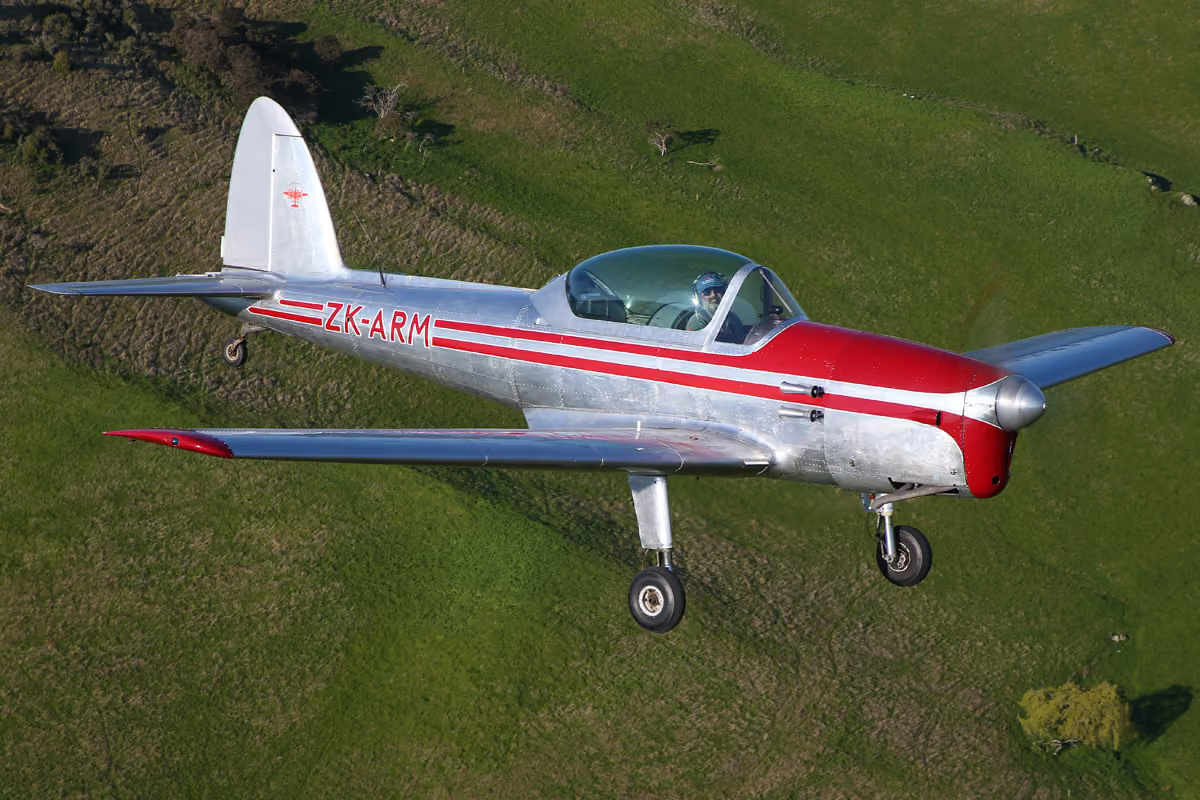
Polish-born engineer Jackie Jakimiuk had worked in the aircraft industry in his homeland up until the joint German / Soviet invasion of 1939. He escaped the occupation and in 1945 led the design of the Chipmunk for the Royal Canadian Air Force, which required a primary trainer to replace the Tiger Moth. The DHC-1 was the first indigenous aircraft built by de Havilland Canada and flew for the first time in 1946. Its simplicity and ease of maintenance made it very popular, and the UK ended up producing 1,000 examples under licence. Undoubtedly its greatest attribute was that it was one of the nicest-handling aeroplanes ever made — consequently Chipmunks have since been referred to as 'the poor man's Spitfire'.
The Chippie served mostly in the air forces of Canada, Portugal and the United Kingdom. Canada retired theirs in 1972 and the RAF theirs in 1996, but the Portuguese were still operating a handful as late as 2018. Many have since found their way into the civil market and several call NZ home. This particular aircraft belongs to Nigel Griffith and is based at Omaka.
Aircraft Specifications
- Engine: de Havilland Gipsy Major, 145 hp
- Maximum speed: 222 km/h
- Wingspan: 10.46 m
- Length: 7.75 m
- Crew: 2 in tandem
- Role: Primary trainer, replacing the Tiger Moth
Manufacturer
Country
Year Built
Registration
Owner / Operator
Pilot
Show appearances
Which shows this aircraft has appeared at, and whether it flew or was on static display.
See it at Classic Fighters 2027
Marlborough Lines Classic Fighters Omaka 2027 runs 26-28 March at Omaka Aerodrome, Blenheim.