About this aircraft
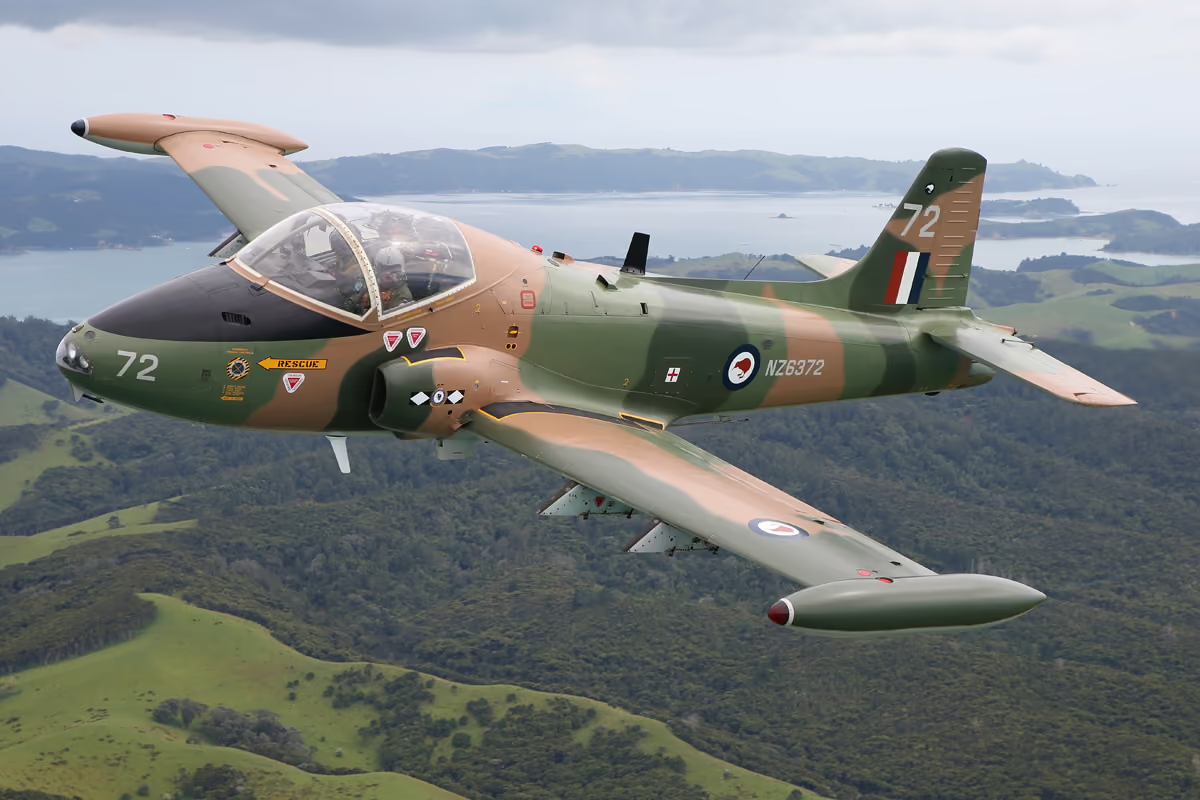
The Strikemaster, a sleek, agile jet aircraft, burst onto the aviation scene in the late 1960s, ready to redefine the boundaries of light attack and counter-insurgency warfare. Its roots trace back to the legendary Percival Provost and Jet Provost trainer, two iconic aircraft that paved the way for its development.
First taking to the skies in 1967, the Strikemaster was designed to deliver a powerful punch in small-scale conflicts, particularly those faced by developing nations. Its versatility and adaptability made it a popular choice for air forces around the globe, with countries like Ecuador, Yemen and Oman deploying it in active combat.
While the Strikemaster gained a reputation for its effectiveness in combat, it also served as a valuable training tool for many air forces. The UK, New Zealand, Saudi Arabia and Singapore all operated the aircraft as advanced jet trainers. In New Zealand, the RNZAF welcomed 16 Strikemasters to its fleet, replacing the ageing Vampire. However, the passage of time brought challenges, and inspections revealed fatigue cracking in the aircraft's wings and tail fins. Despite efforts to address these issues, the Strikemaster's time with the RNZAF came to an end in 1992, when it was replaced by the Aermacchi MB339.
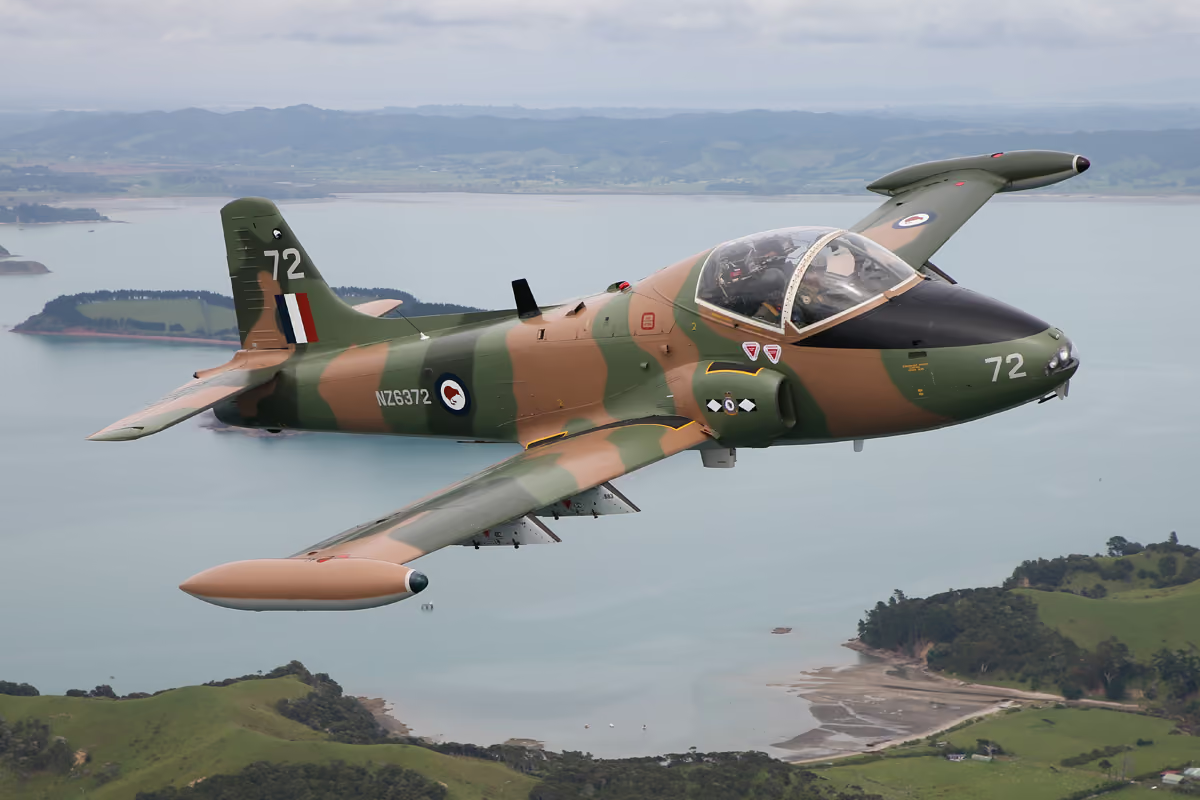
Today, a handful of Strikemasters remain in private hands. One such aircraft, Strikemaster 72, is owned by Charles Davis and proudly calls Wellington International Airport home.
Aircraft Specifications
- Engine: Rolls-Royce Viper turbojet, approximately 15.2 kN thrust
- Maximum speed: 760 km/h
- Wingspan: 11.23 m
- Length: 10.27 m
- Crew: 2, side by side
- Role: Light attack and counter-insurgency
Manufacturer
Country
Year Built
Registration
Owner / Operator
Pilot

Show appearances
Which shows this aircraft has appeared at, and whether it flew or was on static display.
See it at Classic Fighters 2027
Marlborough Lines Classic Fighters Omaka 2027 runs 26-28 March at Omaka Aerodrome, Blenheim.